INTERNATIONAL REFUGEE LAW AND MIGRATION LAW
Online Courses
The Online Courses are structured into different content-related modules, with the objective to provide an in-depth analysis of the subjects of the workshops, including cross-cutting issues. The Online Courses are collaborative and highly participatory in nature and are delivered through a mix of theory and practice, aimed at facilitating the learning process and implementing the knowledge gained throughout the workshop. Participants who attend the online courses are supported by an extensive Online Resource Library including international legal instruments, position papers, documents, and other background materials organized by topics covered during the different courses. Official certificates of completion of Online Courses are awarded by the Institute and have the same validity as the courses organized in our headquarters in Sanremo.
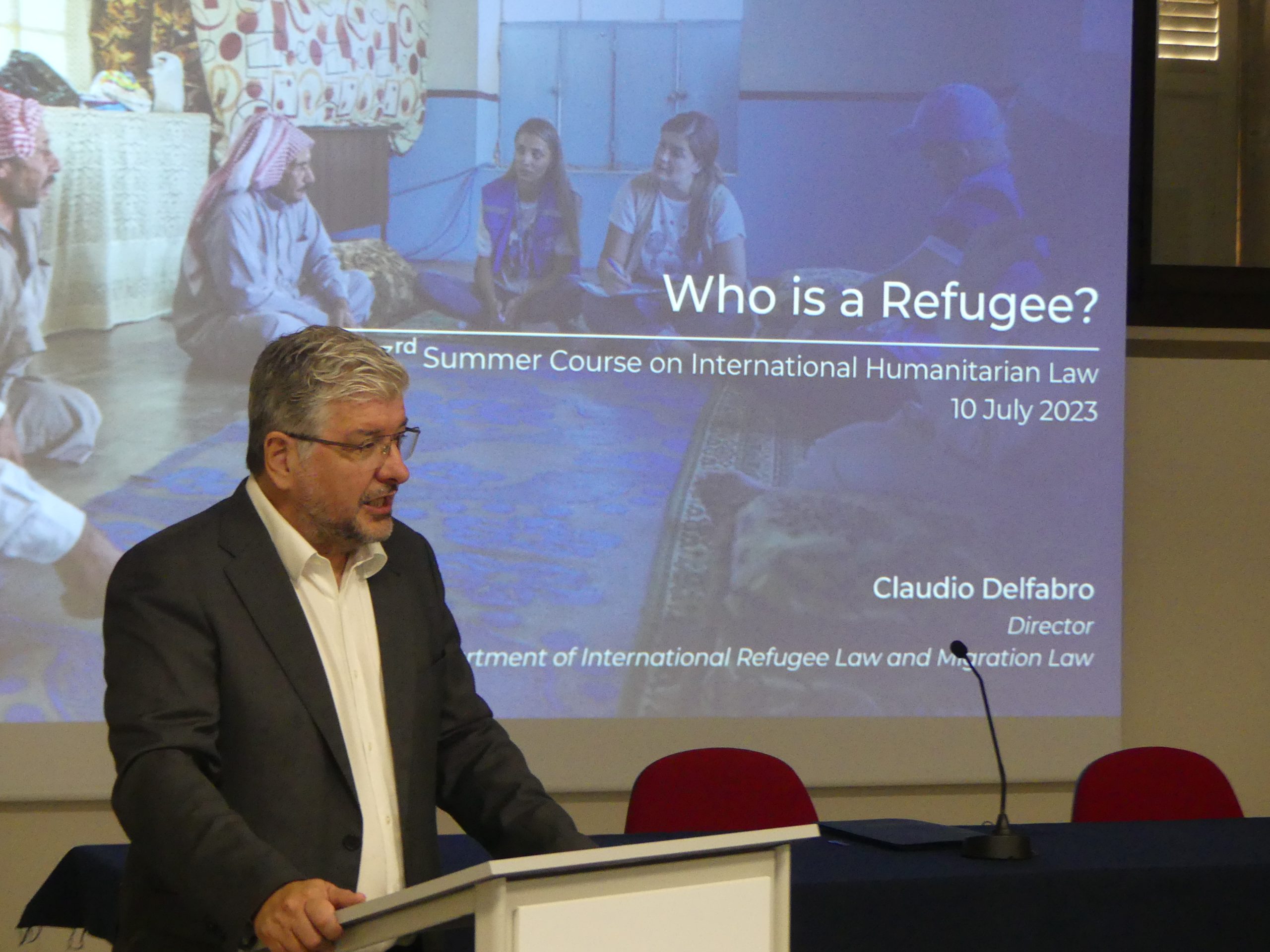
International Refugee Law
The courses on International Refugee Law (English, French, Spanish, Russian and Arabic) present the key aspects of the international protection of refugees. The topics covered range from the analysis of International Refugee Law and its complementarity with other bodies of law to the different displacement phases and durable solutions. Additional refugee-related issues, such as the challenges faced by uprooted persons in urban contexts are further analysed in the context of the Thematic Course on Protecting Refugees in Urban Settings (English). The courses on Teaching Refugee Law (English), instead, explore the latest learning methodologies, with a focus in particular on the design and delivery of online training on Refugee Law. The delivery methodology of the courses includes a mix of theory and practice, including case studies based on real life situations.
Statelessness
The courses on Statelessness (English and Russian) respond to the need of increased knowledge and capacity to prevent, reduce and resolve statelessness and to protect stateless persons worldwide. The curricula of the courses range from the adoption of the Statelessness international conventions and development of national legislation, to the work with stateless persons in the field. Besides the international legal framework related to nationality, the courses’ sessions analyse the causes and impacts of statelessness, the overview of stateless populations around the world, including stateless children, and the interrelation between statelessness and forced displacement. The courses also aims at promoting the use and the implementation of the United Nations High Commissioner for Refugees (UNHCR) Global Action Plan to End Statelessness as part of the #IBelong Campaign.

Internal Displacement
The courses on Internal Displacement (English, French and Spanish) cover the key components of the protection of internally displaced persons (IDPs) throughout their displacement cycle. International norms underpinning the protection of IDPs, including the Guiding Principles on Internal Displacement and the Kampala Convention are analysed in the perspective of better understanding the causes and consequences of internal displacement, its current global trends, the protection risks faced, and the search and implementation of durable and sustainable solutions for IDPs. Cross-cutting issues, such as housing, land and property, data collection, and the international community coordination mechanisms are also addressed. The delivery methodology of the courses is highly participatory.
Migration
The courses on International Migration Law (English, French and Spanish) present the most relevant aspects of the migration phenomenon from different angles, including the obligations and concerns of States and the rights and responsibilities of migrants. The courses include an analysis of the international legal instruments that relate to migration, as well as the legal framework concerning other categories of persons in need of protection. The complex nature of today’s migratory phenomenon is analysed, including trends, causes, journeys and associated risks, integration in the country of destination, and return and reintegration in the country of origin. Key components of migration management and governance are highlighted, within the framework generated by the Global Compact for Safe, Orderly, and Regular Migration.
Thematic Online Courses
The Courses on Advocacy for Protection present the key elements for supporting the transformation of policies, public perception of refugees, internally displaced persons (IDPs), stateless people and migrants. To make sure that advocacy efforts are effective and sustainable, specific focus is also dedicated to practical sessions on protection analysis, advocacy strategies design and message crafting. Concurrently, the Course on Climate Change and Forced Displacement lays the state of the art of the human rights framework, the responsibilities and roles of the international community, states, civil society, and the private sector in addressing climate induced displacement.